What is a hip fracture?
A hip fracture is a break in the thighbone (femur) of your hip joint.
Joints are areas where two or more bones meet. Your hip joint is a "ball and socket" joint, where your thighbone meets your pelvic bone. The ball part of your hip joint is the head of the thighbone. The socket is a cup-like structure in your pelvic bone. It's called the acetabulum. A hip fracture is a serious injury and needs immediate medical care.
Most hip fractures happen to people older than age 65. The risk of hip fractures increases with age. White people and Asian people are more likely to break a hip than others. This is mostly because they are more likely to get osteoporosis. Osteoporosis is a disease that leads to a loss of bone tissue, which weakens bones.
Women are more likely than men to get osteoporosis. And hip fractures are more common among women. Each year, about 2 million people in the U.S. have fractures because of osteoporosis.
Either a single break or multiple breaks can happen in a bone. A hip fracture is classified by the specific area of the break and the type of break or breaks in the bone.
The most common types of hip fractures are:
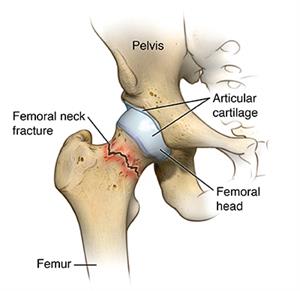
- Femoral neck fracture. This type of fracture happens 1 to 2 inches from the hip joint. This fracture is common among older adults and can be related to osteoporosis. It may be more complex to repair because the break often cuts off the blood supply to the head of the thighbone, which forms the hip joint.
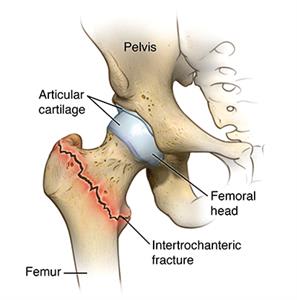
- Intertrochanteric hip fracture. This type of fracture happens 3 to 4 inches from the hip joint. It usually does not interrupt the blood supply to your bone and may be easier to repair.
Most hip fractures are in these two categories and happen in about equal numbers. Another type of fracture called a stress fracture of the hip may be harder to diagnose. It's a hairline crack in the thighbone that may not involve your whole bone. Overuse and repeated motions can cause a stress fracture. The symptoms of this injury may be similar to symptoms of tendonitis or muscle strain.
What causes a hip fracture?
A fall is the most common reason for a hip fracture among older adults. A few people may have a hip fracture happen without a fall. In younger people, a hip fracture is most often the result of a car accident, a fall from a great height, or severe trauma.
Hip fractures are more common in older adults. This is because bones become thinner and weaker from calcium loss as people age. The thinning and weakening are most often caused by osteoporosis.
Bones affected by osteoporosis are more likely to break if you fall. Most hip fractures in older adults are caused by falling while walking on a flat surface, often at home.
If you are female, you lose 30% to 50% of your bone density as you age. The loss of bone speeds up a lot after menopause because the body makes less estrogen. Estrogen helps maintain bone density and strength.
Who is at risk for a hip fracture?
You are at risk for a hip fracture if you have osteoporosis. Older age also puts you at more risk. Other things that may raise your risk include:
- Drinking too much alcohol.
- Not being physically active.
- Having a low body weight.
- Getting poor nutrition, including having a diet low in calcium and vitamin D.
- Being female.
- Being tall.
- Having vision problems.
- Having thinking problems such as dementia.
- Having physical problems.
- Taking medicines that cause bone loss.
- Smoking.
- Living in an assisted-care facility.
- Having a condition that increases your risk of falling, such as weakness, a disability, or an unsteady gait.
There may be other risks, depending on your specific health condition. Talk with your doctor about any concerns you have.
What are the symptoms of a hip fracture?
The most common symptoms of a hip fracture are:
- Hip pain or pain that you can feel in your knee.
- Low back pain.
- Not being able to stand or walk.
- Bruising and swelling.
- A foot turned out at an odd angle, which makes your leg look shorter.
Other medical conditions can cause symptoms similar to a hip fracture. So it's important to go to a doctor for a diagnosis.
How is a hip fracture diagnosed?
Your doctor will ask about your medical history, do a physical exam, and order imaging tests. Tests may include:
- X-rays. X-rays use invisible electromagnetic energy beams to make images of internal tissues, bones, and organs on film.
- MRI. This test uses large magnets, radio waves, and a computer to make detailed images of organs and structures in the body.
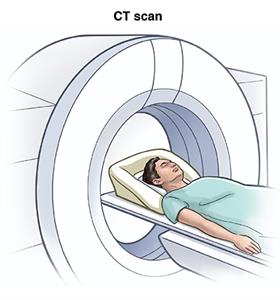
- CT scan. This test uses X-rays and a computer to make detailed images of the body. A CT scan shows details of the bones, muscles, fat, and organs. CT scans are more detailed than standard X-rays.
How is a hip fracture treated?
A fracture of the hip is most often treated with surgery. The surgeon may use metal devices to strengthen and stabilize the joint. In some cases, they may do a partial or total hip replacement. The type of surgery depends on the type of hip fracture you have. Your surgeon will determine the best procedure for you, based on your situation.
The goals of treatment are to provide relief from pain and help you get back to your normal activity level. Hip surgery usually requires a stay in the hospital. While in the hospital, you start doing physical therapy exercises to regain strength and range of motion in your hip. Physical therapy will continue at home or at a rehabilitation (rehab) facility.
What are possible problems from a hip fracture?
Serious problems can result from a hip fracture. Blood clots can happen in the veins, most often in the legs. If a clot breaks off, it can travel to a blood vessel in your lung. This blockage, called a pulmonary embolism, can be deadly.
Other problems that can happen after surgery include:
- Pneumonia.
- Wasting of muscle tissue (muscle atrophy).
- Infection.
- Poor healing in the hip bones.
- Loss of mental ability in older adults.
- Pressure sores from lying in the same position too much.
With some fractures, blood can't circulate properly to the head of the thighbone. This results in a loss of blood supply to the area. This is called femoral avascular necrosis. This problem can happen based on the type of fracture and the anatomy of your blood supply to the head of the thighbone. This is more common with femoral neck fractures.
Most people spend 1 to 2 weeks in the hospital after a hip fracture. The recovery period may be long and may include a stay at a rehab facility. If you lived alone before your hip fracture, you will most likely need help from others at home or need the services of a long-term care facility. Hip fractures can result in a loss of independence, reduced quality of life, and depression. This is especially true for older adults.
How can you help prevent a hip fracture?
To help prevent a hip fracture, take enough calcium and vitamin D each day.
If you are a woman in menopause, consider having a bone density test. The loss of bone speeds up a lot after menopause because the body makes less estrogen. Estrogen helps maintain bone density and strength. A bone density test measures your bone mineral content and the thickness of your bones. This measurement helps your doctor determine if you have osteoporosis, which causes your bones to be more brittle and more likely to fracture easily. A bone density test is most often used to diagnose osteoporosis and to determine your risk for a fracture. Most people don't know they have osteoporosis until they have a fracture.
Another way to help prevent hip fractures is to do regular weight-bearing exercise, such as walking, jogging, or hiking. Exercise programs such as tai chi help promote strength and balance.
Here are some other things you can do to help prevent a hip fracture.
- Take medicines as prescribed by your doctor to prevent bone loss.
- Ask your doctor to review your medicines to see if any might make you dizzy or sleepy.
- Eat a diet rich in vitamin D and calcium, including milk, cottage cheese, yogurt, sardines, and broccoli.
- Don't smoke.
- Don't drink too much alcohol.
- Keep objects, such as electrical cords, off the stairs and floors to prevent falls.
- Use slip-resistant rugs next to the bathtub, and install grab bars in the tub.
- Put night lights from the bedroom to the bathroom.
- Remove rugs, or use rug pads or nonskid backing to keep rugs in place.
- Don't use unsteady furniture or stepladders.
- Visit an ophthalmologist every year to have your vision checked and to treat any vision loss.
Key points about hip fractures
- Most hip fractures happen to older adults.
- A fall is the most common reason for a hip fracture among older adults.
- Hip fractures are more common among women.
- Osteoporosis and older age are the major risk factors.
- A fracture of the hip is most often treated with surgery.
- Serious problems can result from a hip fracture.
- Women at menopause should consider having a bone density test.
- Regular weight-bearing exercise helps to prevent hip fractures.
Next steps
Use these tips to help you get the most from a visit to your doctor.
- Know the reason for your visit and what you want to happen.
- Before your visit, write down questions you want answered.
- Bring someone with you to help you ask questions and remember what your doctor tells you.
- At the visit, write down the name of any new diagnosis and any new medicines, treatments, or tests. Also write down any new instructions your doctor gives you.
- Know why a new medicine or treatment is prescribed and how it will help you. Also know what the side effects are.
- Ask if your condition can be treated in other ways.
- Know why a test or procedure is recommended and what the results could mean.
- Know what to expect if you don't take the medicine or have the test or procedure.
- If you have a follow-up appointment, write down the date, time, and purpose for that visit.
- Know how you can contact your doctor if you have questions, especially after office hours and on weekends and holidays.
Online Medical Reviewer: Daphne Pierce-Smith MSN FNP RN CCRC
Online Medical Reviewer: Joy Fincannon RN MN
Online Medical Reviewer: Kelley Gaskin RN MN
Online Medical Reviewer: Kelley GaskinLee Jenkins
Online Medical Reviewer: Louise Akin RN BSN
Online Medical Reviewer: Nancy Bowers RN MPH RN MPH
Online Medical Reviewer: Sara Foster RN MPH
Online Medical Reviewer: Lee Jenkins
Date Last Reviewed: 08/31/2025
© 2000-2026 The StayWell Company, LLC. All rights reserved. This information is not intended as a substitute for professional medical care. Always follow your healthcare professional's instructions.