August 2021
It sounds like one of those too-good-to-be-true claims in late-night infomercials or spam subject lines: Exercise less, improve your fitness.
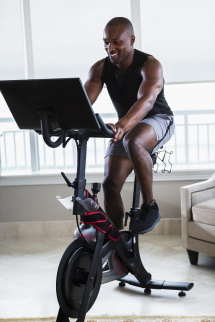
That, in short, is the promise of high-intensity interval training (HIIT). A HIIT session:
-
Can last about half an hour or less
-
Burns more calories than classic workouts
-
Gives your heart a powerful workout
Best of all, these claims are backed by scientific research.
HIIT isn’t for everyone. But it can be a good alternative if you’re time-crunched, already exercising, and looking to stay fit or get fitter.
Run, don’t walk
How does HIIT work? You alternate bursts of high-intensity movement with longer bouts of low-intensity movement.
Alternating work and recovery intervals with HIIT helps train your body to become efficient at producing and using energy. It also teaches your body to effectively remove metabolic waste from the muscles between the work intervals. During HIIT, aim for about 1 minute of work to every 2 to 3 minutes of active recovery.
What’s your hurry?
You won’t be able to exercise at a high intensity for long. Yet you don’t have to to get a range of health benefits. HIIT training has been shown to:
-
Improve your aerobic and anaerobic fitness
-
Maintain muscle mass while decreasing belly fat and body weight
-
Benefit your cardiovascular health
-
Increase insulin sensitivity, which helps your body control insulin and blood glucose levels
Bonus: When comparing different types of exercise, many people rank HIIT as the most enjoyable activity.
Warning: Take precautions
HIIT may not be recommended for certain people. In fact, you shouldn’t try HIIT without asking your healthcare provider.
If HIIT is safe for you, make sure to warm up enough and give yourself ample recovery time between the high-intensity intervals. HIIT routines are more draining compared with steady endurance workouts. After your workout, give your body time to recover. Twice-a-week HIIT sessions are plenty.
HIIT can work on a treadmill or track, a stationary or road bike, or even in a pool. For example, a HIIT running workout could start with a 5-minute warmup, then alternate a 1-minute running sprint with 2 minutes of walking. Repeat this sprint-walk pairing 3 times, for a total of 4 iterations. The final 1-minute sprint and 2 minutes of walking are followed by a 5-minute cooldown. This workout would take 22 minutes with just 4 minutes of high-intensity effort. That’s a shorter time commitment than many exercises.
With high-intensity workouts in your arsenal, lack of time is no longer a valid excuse for not exercising. You can always HIIT it.